7th April 2026
Vision Support for Elderly Residents in Care Homes
As people age, changes in vision can affect nearly every aspect of daily life—from reading and mobility to confidence and emotional wellbeing. For many families searching for compassionate residential care, ensuring proper elderly vision support is a major priority. A care home that understands the unique needs of visually impaired seniors can dramatically improve quality of life, comfort, and independence.
Modern care homes are increasingly adopting specialized strategies, adaptive technologies, and personalised support systems to help residents with vision challenges continue living safely and confidently. Whether a senior is dealing with cataracts, glaucoma, macular degeneration, or reduced depth perception, the right environment can make a significant difference.
At PVCH Care Home, providing compassionate and safe support for elderly residents includes recognising how visual health impacts everyday wellbeing.
Why Vision Support Matters in Elderly Care
Vision loss is one of the most common health concerns among older adults. Even mild visual impairment can increase the risk of:
- Falls and injuries
- Medication errors
- Social isolation
- Anxiety and confusion
- Reduced mobility
- Loss of confidence in daily activities
For seniors living in residential settings, proper vision support goes beyond medical care. It involves creating a safe, accessible, and empowering environment where residents feel comfortable navigating their surroundings independently.
A strong focus on residential care safety ensures that visually impaired residents remain active participants in their daily routines rather than feeling dependent or restricted.
Common Vision Challenges Faced by Seniors
Understanding age-related eye conditions helps care providers deliver more effective support. Some of the most common conditions affecting elderly residents include:
Cataracts
Cataracts cause cloudy vision and increased sensitivity to light. Seniors may struggle with reading, recognising faces, or moving around unfamiliar spaces.
Glaucoma
This condition damages the optic nerve and often reduces peripheral vision. Residents may not notice objects to the side, increasing fall risks.
Macular Degeneration
Age-related macular degeneration affects central vision, making tasks like reading, eating, and identifying people more difficult.
Diabetic Retinopathy
Linked to diabetes, this condition can lead to blurry vision and sight loss if unmanaged.
General Age-Related Vision Decline
Even without a diagnosed eye condition, many seniors experience:
- Difficulty focusing
- Reduced night vision
- Increased glare sensitivity
- Lower contrast perception
These changes can impact everyday independence if proper accommodations are not in place.
Creating a Safe Environment for Visually Impaired Seniors
An effective care home environment is designed with accessibility and safety in mind. Small environmental adjustments can have a major impact on confidence and mobility.
Enhanced Lighting Throughout the Home
Good lighting is one of the most important aspects of elderly vision support. Care homes can improve visibility through:
- Bright, glare-free lighting
- Motion-sensor hallway lights
- Adjustable bedside lamps
- Natural daylight exposure
- Illuminated bathroom pathways at night
Proper lighting helps reduce accidents while making daily activities easier and less stressful.
High-Contrast Design Features
Using contrasting colours improves depth perception and visibility for visually impaired residents. Examples include:
- Dark handrails against light walls
- Contrasting toilet seats
- Clearly marked door frames
- Colour-coded room signage
These simple design changes support safer navigation and encourage senior independence.
Clutter-Free Walkways
Clear pathways reduce trip hazards and help residents move around confidently. Care homes focused on residential care safety often implement:
- Non-slip flooring
- Minimal furniture obstruction
- Organised communal spaces
- Secure rugs and mats
This approach helps create a calmer and more manageable environment for elderly residents.
Supporting Daily Independence
Maintaining independence is essential for emotional wellbeing and self-esteem. Even residents with significant vision impairment can continue participating in daily activities with the right support.
Assistance with Reading and Communication
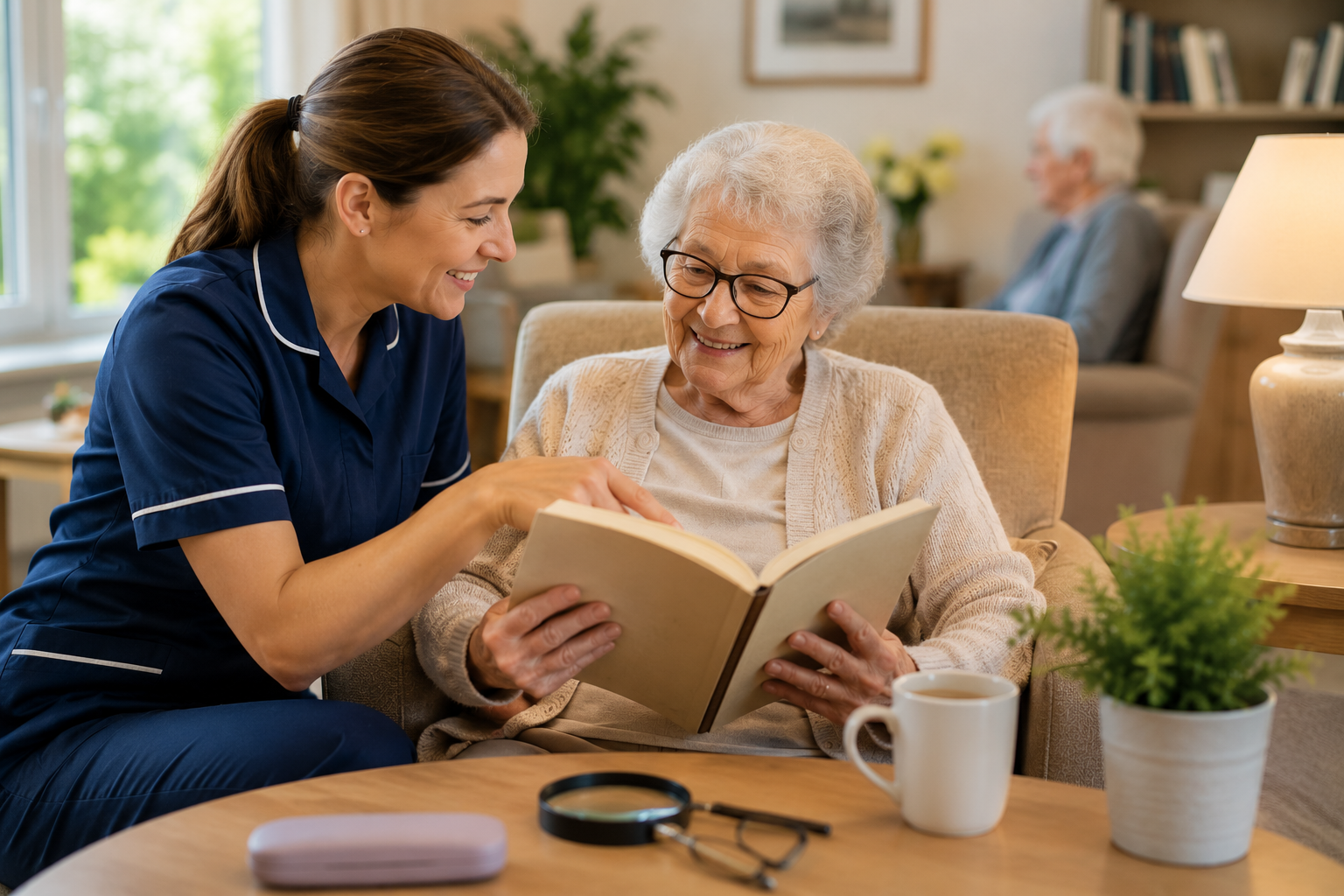
Many seniors enjoy reading newspapers, letters, books, or religious materials. Care teams can support this through:
- Large-print reading materials
- Magnifying devices
- Audiobooks
- Voice-assisted technology
- Reading assistance from staff
Encouraging communication and engagement helps residents stay mentally active and socially connected.
Adaptive Dining Support
Visual impairment can make mealtimes challenging. Care homes can improve dining experiences by:
- Using high-contrast plates and utensils
- Clearly describing food placement
- Ensuring consistent table layouts
- Providing adequate lighting during meals
These small adjustments allow seniors to eat more independently and comfortably.
Encouraging Mobility and Confidence
Physical movement remains important for overall health. Staff trained in guiding visually impaired seniors can help residents safely enjoy:
- Garden walks
- Social activities
- Group exercise sessions
- Community areas
This balance between assistance and autonomy is key to maintaining confidence.
The Role of Staff Training in Vision Support
Compassionate care starts with understanding. Staff education is critical when supporting elderly residents with visual impairments.
Professional training may include:
- Safe guiding techniques
- Effective verbal communication
- Recognising signs of worsening vision
- Fall prevention strategies
- Emergency evacuation support
Trained caregivers understand how to preserve dignity while providing necessary assistance.
For example, staff should announce their presence when entering a resident’s room rather than relying on visual cues alone. Simple communication habits can significantly reduce confusion and anxiety.
Technology Improving Elderly Vision Support
Technology is playing an increasingly important role in helping seniors maintain independence.
Voice-Controlled Devices
Smart speakers and voice assistants can help residents:
- Set reminders
- Listen to music
- Make calls
- Check the weather
- Control room lighting
These tools reduce reliance on visual interfaces.
Digital Magnifiers
Electronic magnification devices make reading easier for seniors with limited vision.
Medication Reminder Systems
Talking medication dispensers and audible reminders help reduce medication errors while supporting safer self-management.
Emergency Alert Systems
Wearable emergency buttons provide reassurance for both residents and families, particularly for seniors at higher risk of falls.
Emotional Wellbeing and Social Inclusion
Vision loss affects more than physical ability—it can also impact emotional health. Seniors experiencing reduced vision may withdraw socially or lose confidence in participating in activities.
A supportive care environment helps prevent feelings of isolation by encouraging:
- Group activities
- Music therapy
- Social events
- Gentle exercise classes
- One-on-one interaction
Care homes that prioritise inclusion help residents maintain meaningful social connections and emotional wellbeing.
Family Involvement in Vision Care
Families play an important role in supporting visually impaired seniors. Open communication between care staff and loved ones ensures residents receive personalised care tailored to their preferences and needs.
Family members can assist by:
- Updating prescriptions regularly
- Providing familiar personal items
- Labelling belongings clearly
- Sharing routines and preferences
- Attending eye care appointments when possible
Strong collaboration creates a more comfortable and reassuring experience for residents.
Choosing the Right Care Home for Vision Support
When evaluating care homes, families should consider how well the facility supports residents with visual impairments.
Important questions to ask include:
- Are staff trained in supporting visually impaired seniors?
- Is the environment designed for accessibility and safety?
- Are mobility aids accommodated?
- How are falls prevented?
- Are residents encouraged to remain independent?
- Is lighting appropriate throughout the home?
A care home committed to elderly vision support will prioritise both safety and dignity while creating a welcoming atmosphere for residents.
Building a Better Quality of Life for Seniors
Vision changes do not have to mean losing independence or confidence. With compassionate support, adaptive environments, and personalised care, elderly residents can continue living fulfilling and meaningful lives.
The best care homes understand that supporting visually impaired seniors requires more than assistance—it requires empathy, patience, and thoughtful attention to individual needs. From safer mobility to improved emotional wellbeing, comprehensive vision support enhances every aspect of residential living.
Families seeking compassionate elderly care should look for environments where residential care safety and senior independence are treated as essential priorities rather than optional extras.
Helping Seniors Thrive with Compassionate Vision Support
Every senior deserves to feel safe, respected, and empowered in their daily life. By creating accessible environments and offering personalised assistance, care homes can help residents maintain confidence and dignity despite vision challenges.
To learn more about compassionate residential care and support services for elderly residents, explore the care options available at PVCH Care Home today.
Recent Posts



