9th April 2026
Supporting Seniors Living With Parkinson’s Disease
Living with Parkinson’s disease can feel overwhelming, especially for older adults navigating changes in mobility, independence, and daily routines. But with the right support system, compassionate care, and tailored lifestyle adjustments, seniors can continue to enjoy comfort, dignity, and meaningful experiences every day.
As families search for trusted solutions for Parkinson’s care seniors, understanding the unique needs associated with neurological conditions becomes essential. From specialized mobility support to emotional wellbeing, modern care homes play a vital role in helping elderly residents thrive.
Understanding Parkinson’s Disease in Older Adults
Parkinson’s disease is a progressive neurological disorder that primarily affects movement. While symptoms can vary from person to person, many seniors experience:
- Tremors or shaking
- Muscle stiffness
- Slower movement
- Balance difficulties
- Fatigue
- Changes in speech
- Cognitive challenges
For elderly individuals, these symptoms may gradually impact independence and overall quality of life. This is why professional neurological elderly care is so important in ensuring safety, comfort, and emotional support.
Families often notice that routine tasks such as dressing, eating, or walking become more challenging over time. With proper care planning and compassionate assistance, seniors can maintain confidence and continue participating in daily activities.
Why Specialized Parkinson’s Care Matters
Not all elderly care services are equipped to support residents living with neurological conditions. Parkinson’s disease requires personalized attention that addresses both physical and emotional needs.
Specialized Parkinson’s care seniors programs often include:
- Individualized care plans
- Medication management
- Mobility assistance
- Fall prevention strategies
- Emotional support
- Cognitive stimulation activities
- Nutritional guidance
A professional care environment also helps reduce stress for family members, offering reassurance that their loved one is receiving attentive and compassionate care.
Creating a Safe and Comfortable Living Environment
Safety is one of the biggest concerns for seniors with Parkinson’s disease. Reduced balance and coordination can increase the risk of falls, making environmental adjustments essential.
Effective care homes often implement:
Mobility-Friendly Spaces
Clear walkways, handrails, non-slip flooring, and accessible furniture make movement easier and safer for residents.
Calm and Structured Routines
Predictable schedules help reduce confusion and anxiety while supporting cognitive wellbeing.
Comfortable Social Areas
Encouraging social interaction helps seniors stay mentally engaged and emotionally connected.
Personalized Bedrooms
Familiar surroundings can improve comfort, reduce stress, and support restful sleep.
A thoughtfully designed environment can dramatically improve daily living for seniors requiring elderly mobility support.
The Importance of Mobility Support for Seniors
Mobility challenges are among the most common concerns for people living with Parkinson’s disease. Difficulty walking, stiffness, and balance issues can affect independence and confidence.
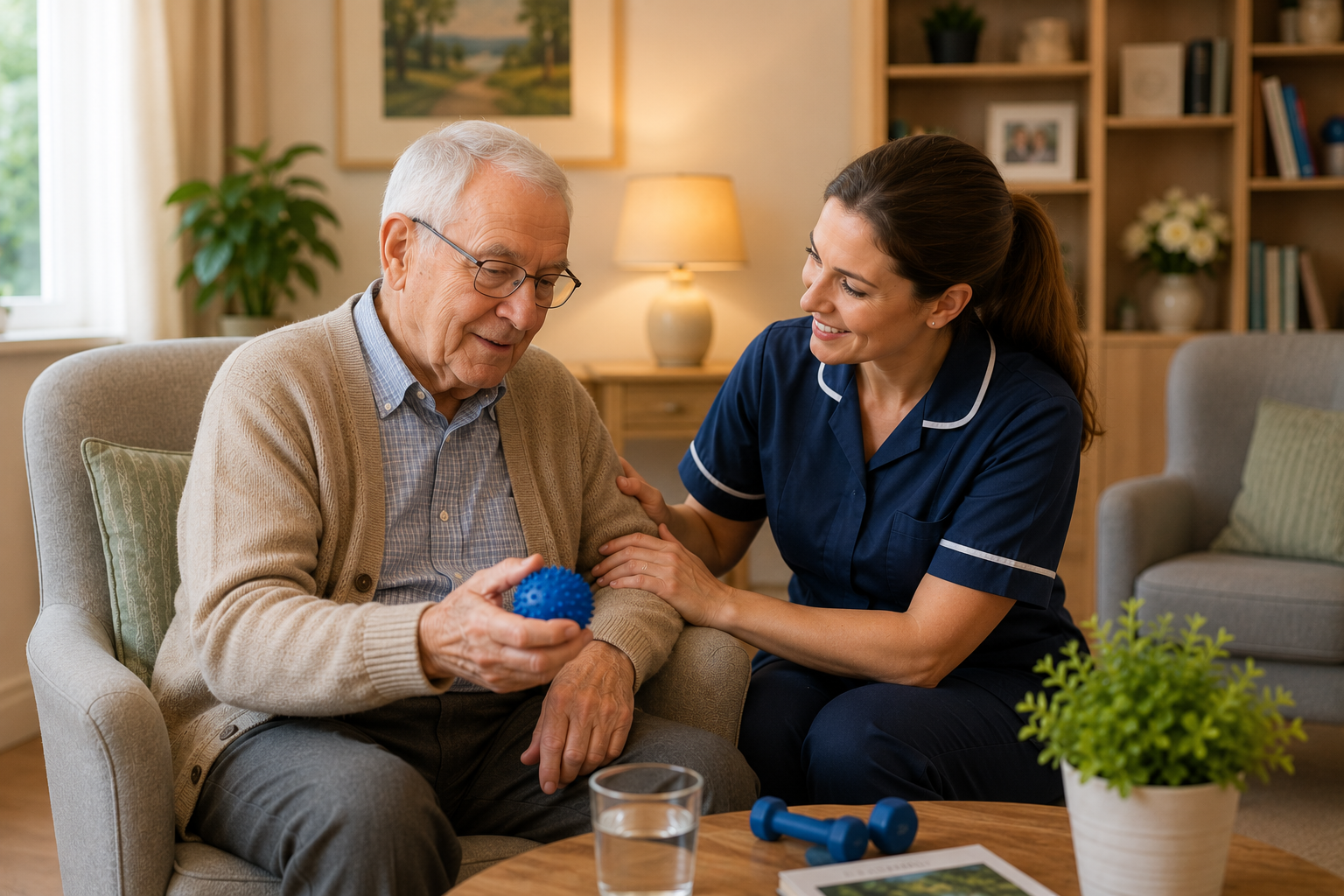
Professional elderly mobility support focuses on helping seniors remain active and safe while preserving dignity.
Key Mobility Support Strategies
Gentle Exercise Programs
Regular movement can improve flexibility, balance, and coordination. Activities may include:
- Chair exercises
- Stretching routines
- Guided walking sessions
- Balance training
- Low-impact fitness activities
Assisted Walking Support
Care staff may provide physical assistance or mobility aids such as walkers and supportive equipment.
Fall Prevention Measures
Monitoring movement patterns and adapting support plans can significantly reduce fall risks.
Physiotherapy Support
Specialized therapy sessions can help seniors maintain strength and mobility for as long as possible.
Encouraging safe movement also supports emotional wellbeing by helping residents feel more independent and capable.
Emotional and Mental Wellbeing in Parkinson’s Care
Parkinson’s disease affects more than physical health. Many seniors also experience emotional challenges, including:
- Anxiety
- Depression
- Isolation
- Frustration
- Memory concerns
High-quality neurological elderly care includes emotional support that nurtures mental wellbeing alongside physical care.
Supporting Emotional Health
Care teams can help seniors feel supported by:
- Encouraging meaningful conversations
- Providing companionship
- Organizing social activities
- Supporting hobbies and interests
- Creating calming daily routines
Families also play an important role by maintaining regular visits and staying involved in care decisions.
Nutrition and Healthy Living for Seniors With Parkinson’s
A balanced diet can positively impact energy levels, strength, and overall health for seniors living with Parkinson’s disease.
Many care homes focus on:
- Nutritious, balanced meals
- Hydration support
- Easy-to-eat food options
- Mealtime assistance when needed
- Dietary adjustments for medication schedules
Healthy eating supports both physical wellbeing and cognitive function, making nutrition an important part of comprehensive Parkinson’s care seniors services.
Personalized Care Plans Make a Difference
Every individual experiences Parkinson’s disease differently. Personalized care plans ensure support is tailored to each resident’s unique needs, preferences, and health requirements.
Customized care may include:
- Medication scheduling
- Daily living assistance
- Mobility monitoring
- Emotional wellbeing support
- Specialist healthcare coordination
- Family communication updates
Personalized approaches help seniors feel respected, valued, and empowered in their daily lives.
Supporting Families Through the Journey
Caring for a loved one with Parkinson’s disease can be emotionally demanding for families. Many relatives experience stress, worry, and uncertainty as symptoms progress.
Professional care homes can provide reassurance through:
- Open communication
- Regular care updates
- Compassionate guidance
- Emotional support for families
- Flexible visiting opportunities
Knowing a loved one is receiving dedicated neurological elderly care allows families to focus more on quality time together.
The Role of Compassionate Care Teams
Behind every successful Parkinson’s support program is a dedicated care team. Compassionate carers understand the importance of patience, empathy, and dignity when supporting elderly residents.
Experienced staff members are trained to assist with:
- Daily care routines
- Mobility challenges
- Medication support
- Emotional wellbeing
- Communication difficulties
- Cognitive support
Building trusting relationships with residents helps create a warm and supportive care environment where seniors feel comfortable and secure.
Encouraging Independence and Dignity
One of the most valuable aspects of professional Parkinson’s care is helping seniors maintain as much independence as possible.
Simple actions such as allowing residents extra time to complete tasks, encouraging participation in activities, and respecting personal preferences can significantly improve confidence and self-esteem.
Quality elderly mobility support focuses not just on assistance, but also on empowerment.
Activities That Enhance Quality of Life
Staying socially and mentally engaged can have a positive impact on seniors living with Parkinson’s disease.
Popular care home activities may include:
- Music therapy
- Arts and crafts
- Gentle fitness sessions
- Gardening
- Reading groups
- Social gatherings
- Memory-focused games
These activities encourage connection, joy, and emotional wellbeing while supporting cognitive health.
Choosing the Right Parkinson’s Care Environment
Selecting the right care home for a loved one is an important decision. Families should look for environments that prioritize:
- Compassionate staff
- Safe facilities
- Personalized care plans
- Mobility support services
- Neurological care experience
- Comfortable living spaces
- Strong communication with families
A supportive environment can make a meaningful difference in the daily lives of seniors managing Parkinson’s disease.
Looking Ahead With Confidence
Although Parkinson’s disease presents ongoing challenges, compassionate care and professional support can greatly improve quality of life for elderly individuals. With personalized assistance, safe environments, and meaningful social engagement, seniors can continue to live with dignity, comfort, and connection.
Families seeking trusted Parkinson’s care seniors services should focus on finding care environments that truly understand the importance of empathy, mobility support, and specialized neurological care.
At Park View Care Home, compassionate support and resident wellbeing remain at the heart of quality elderly care. Explore tailored care services designed to help seniors feel safe, valued, and supported every step of the way.
Recent Posts



