11th April 2026
Diabetes Care for Seniors | Expert Elderly Support
Managing diabetes in later life can feel overwhelming, but with the right support, seniors can continue living comfortably, confidently, and independently. Diabetes care for seniors requires a thoughtful, personalised approach that balances medical management, nutrition, activity, and emotional wellbeing.
As we age, the body changes in ways that can make elderly blood sugar support more complex. Reduced mobility, medication interactions, memory concerns, and changes in appetite can all affect diabetes management. Families often worry about whether their loved one is receiving the right care—and that’s where dedicated senior support becomes invaluable.
Understanding Diabetes in Older Adults
Diabetes is one of the most common chronic health conditions affecting older adults. Both Type 1 and Type 2 diabetes require ongoing monitoring, but Type 2 diabetes is significantly more prevalent among seniors.
Common symptoms seniors may experience include:
- Increased thirst
- Frequent urination
- Fatigue
- Blurred vision
- Slow wound healing
- Unexplained weight changes
- Recurring infections
- Dizziness or confusion
For older adults, diabetes can sometimes present differently. Symptoms may be mistaken for normal ageing, making diagnosis or management more challenging.
Effective senior health management means recognising these subtle warning signs early.
Why Diabetes Management Changes With Age
Ageing introduces unique challenges that affect diabetes control.
Reduced Sensitivity to Low Blood Sugar
Older adults may not always notice early signs of hypoglycaemia, such as:
- Shaking
- Sweating
- Weakness
- Rapid heartbeat
Instead, symptoms may appear as:
- Confusion
- Falls
- Drowsiness
- Sudden irritability
This makes consistent elderly blood sugar support essential.
Multiple Health Conditions
Many seniors manage multiple conditions alongside diabetes, including:
- Arthritis
- Heart disease
- Kidney disease
- High blood pressure
- Cognitive decline
Balancing medications and routines becomes increasingly complex.
Nutritional Changes
Ageing often affects:
- Appetite
- Taste preferences
- Digestion
- Ability to prepare meals
A tailored nutritional plan helps maintain stable glucose levels without compromising enjoyment or comfort.
Essential Diabetes Care for Seniors
Providing quality diabetes care for seniors involves more than medication reminders.
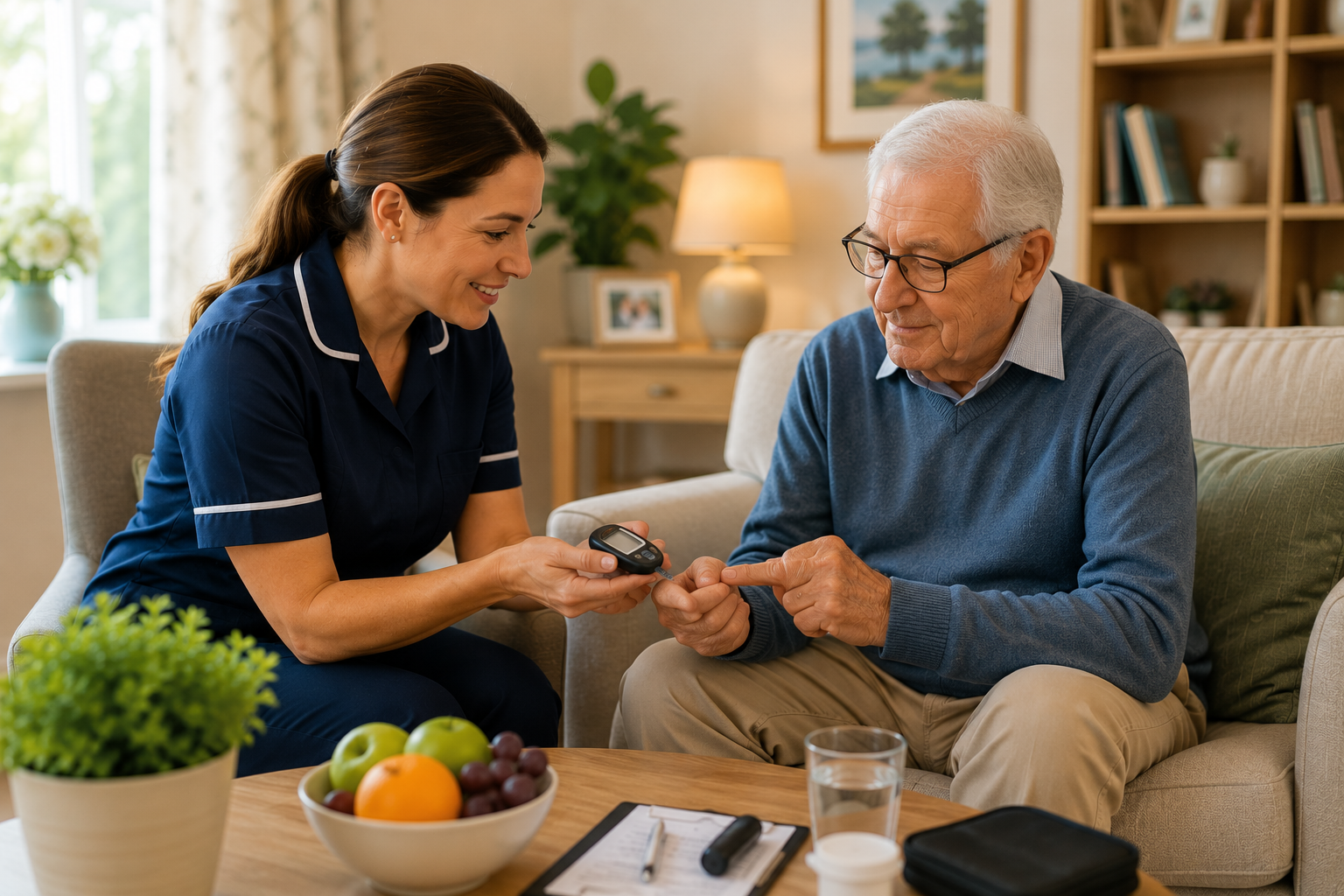
Personalised Blood Sugar Monitoring
Regular glucose monitoring helps identify patterns and prevent complications.
Care teams may assist with:
- Blood sugar checks
- Recording readings
- Monitoring unusual changes
- Coordinating with healthcare professionals
Monitoring routines should be adapted to the senior’s mobility, dexterity, and cognitive ability.
Medication Management Support
Medication errors can lead to serious complications.
Support may include:
- Timely medication reminders
- Insulin administration assistance
- Prescription coordination
- Monitoring side effects
- Avoiding duplicate medications
This is a critical part of effective senior health management.
Balanced Nutrition Planning
Healthy eating doesn’t mean restrictive or joyless meals.
Good diabetic nutrition for seniors focuses on:
- Controlled carbohydrate intake
- High-fibre foods
- Lean proteins
- Hydration support
- Regular meal timing
- Reduced processed sugars
A compassionate care environment ensures dietary needs are met without sacrificing preference or dignity.
Safe Physical Activity for Seniors With Diabetes
Movement plays a major role in diabetes management.
Even gentle activities can improve:
- Blood sugar control
- Circulation
- Mobility
- Mood
- Sleep quality
Suitable activities may include:
- Walking
- Chair exercises
- Light stretching
- Supervised mobility routines
- Balance-focused movements
Activity plans should always reflect individual capability and health conditions.
Preventing Diabetes Complications in Older Adults
Proper care helps reduce long-term complications.
Foot Care Monitoring
Diabetes can reduce circulation and sensation in the feet.
Daily checks help identify:
- Cuts
- Blisters
- Swelling
- Redness
- Pressure sores
Early intervention prevents serious infections.
Vision Support
Diabetes increases risk of eye conditions, including diabetic retinopathy.
Support may include:
- Appointment reminders
- Mobility assistance
- Visual environment adaptations
Hydration Management
Dehydration can quickly destabilise blood sugar.
Care teams should encourage:
- Regular fluids
- Monitoring intake
- Recognising dehydration signs
Emotional Wellbeing and Diabetes
Living with a chronic condition can impact mental health.
Seniors may experience:
- Anxiety
- Frustration
- Isolation
- Depression
- Fear of complications
Compassionate diabetes care includes emotional reassurance, routine stability, and social engagement.
A supportive environment can make a significant difference in quality of life.
Diabetes and Cognitive Challenges
Memory issues or dementia can complicate diabetes management.
Common concerns include:
- Forgotten medications
- Irregular eating
- Difficulty reporting symptoms
- Unsafe insulin administration
Structured support becomes especially important for safe elderly blood sugar support.
Professional carers can help maintain routines that reduce risk while preserving independence.
When Home Care Support Makes a Difference
Families often wonder when additional support is needed.
Signs may include:
- Frequent blood sugar fluctuations
- Missed medications
- Increased falls
- Difficulty preparing meals
- Weight loss
- Poor personal hygiene
- Confusion around diabetes routines
Professional care provides reassurance for both seniors and families.
The Role of Residential Care in Diabetes Management
A dedicated care home environment offers consistent support for complex health needs.
Benefits often include:
- Structured medication management
- Nutritionally balanced meals
- Regular health monitoring
- Personal care assistance
- Social interaction
- Safer living environments
- Fast response to health concerns
For seniors requiring ongoing support, residential care can significantly improve wellbeing.
Creating a Personalised Senior Diabetes Care Plan
Every individual’s diabetes journey is different.
An effective care plan should consider:
- Medical history
- Medication requirements
- Dietary preferences
- Activity levels
- Cognitive health
- Mobility limitations
- Emotional wellbeing
- Personal routines
The best diabetes care for seniors combines medical oversight with compassionate day-to-day support.
Supporting Families Through Diabetes Care Decisions
Choosing care for an ageing loved one is never simple.
Families often need clarity on:
- Level of assistance required
- Health monitoring expectations
- Meal management
- Specialist care availability
- Emergency response capability
Open communication with care professionals helps families make informed decisions confidently.
Helping Seniors Live Well With Diabetes
A diabetes diagnosis does not mean giving up independence or quality of life.
With tailored support, older adults can continue enjoying routines, relationships, and meaningful daily experiences.
At Park View Care Home, compassionate senior support focuses on dignity, comfort, and personalised wellbeing—helping residents manage long-term health conditions safely and confidently.
Looking for trusted support for a loved one living with diabetes? Explore our tailored senior care services and discover how personalised care can make everyday life safer, healthier, and more comfortable.
Recent Posts



