23rd April 2026
Oral Health Support for Seniors in Care Homes
A healthy smile is about far more than appearance — it plays a vital role in comfort, confidence, nutrition, and overall wellbeing. For older adults, maintaining good oral hygiene can become increasingly challenging, especially when mobility issues, medical conditions, or cognitive decline are involved.
That’s why compassionate and professional oral care is such an essential part of modern elderly support. In care homes, personalised dental hygiene routines and proactive health monitoring help seniors maintain dignity, reduce discomfort, and enjoy a better quality of life every day.
Why Elderly Oral Health Matters More Than Ever
As we age, our mouths naturally become more vulnerable to dental problems. Conditions such as dry mouth, gum disease, tooth decay, and oral infections become increasingly common in later life.
Poor elderly oral health can affect much more than teeth and gums. It may contribute to:
- Difficulty eating and swallowing
- Weight loss or poor nutrition
- Speech problems
- Increased discomfort and pain
- Reduced self-confidence
- Greater risk of infection
- Links to wider health conditions
Research also suggests connections between oral health and chronic illnesses such as heart disease, diabetes, and respiratory infections. This makes daily dental care an important part of overall senior wellbeing.
Common Oral Health Challenges for Seniors
Many older adults face unique dental concerns that require specialised support and attention.
Dry Mouth
Dry mouth is especially common among seniors due to medications, dehydration, or certain medical conditions. Reduced saliva can increase the risk of tooth decay and oral infections.
Gum Disease
Gum inflammation and periodontal disease can develop gradually and may go unnoticed until discomfort becomes severe. Early intervention helps prevent complications.
Tooth Loss and Denture Care
Missing teeth or poorly fitting dentures can affect eating, speaking, and self-esteem. Proper denture cleaning and regular adjustments are essential for comfort.
Difficulty Maintaining Daily Hygiene
Conditions such as arthritis, dementia, Parkinson’s disease, or reduced mobility may make brushing and flossing difficult without assistance.
Oral Sensitivity
Seniors may experience sensitive teeth, sore gums, or mouth ulcers that require gentle care and professional assessment.
A well-structured care home health support plan helps identify these issues early and provides tailored solutions that protect both comfort and health.
The Importance of Dental Hygiene for Seniors
Good oral care routines are one of the simplest yet most effective ways to support senior health. Proper dental hygiene seniors receive every day can significantly reduce the risk of infections, discomfort, and avoidable dental complications.
Daily oral care should include:
- Brushing teeth twice daily
- Cleaning dentures thoroughly
- Flossing where appropriate
- Moisturising dry mouths
- Monitoring for sores or swelling
- Regular dental check-ups
Care teams in supportive environments often assist residents who struggle with independent oral hygiene while preserving dignity and personal choice.
How Care Homes Support Elderly Oral Health
Quality care homes recognise that oral hygiene is not separate from healthcare — it is an essential part of holistic wellbeing.
Professional carers and nursing teams provide compassionate assistance designed around each resident’s individual needs.
Personalised Oral Care Plans
Every senior has unique oral health requirements. Care homes often develop tailored plans that consider:
- Existing dental conditions
- Denture use
- Medication side effects
- Mobility limitations
- Cognitive health
- Dietary needs
This personalised approach ensures seniors receive safe and effective daily care.
Assistance With Daily Hygiene
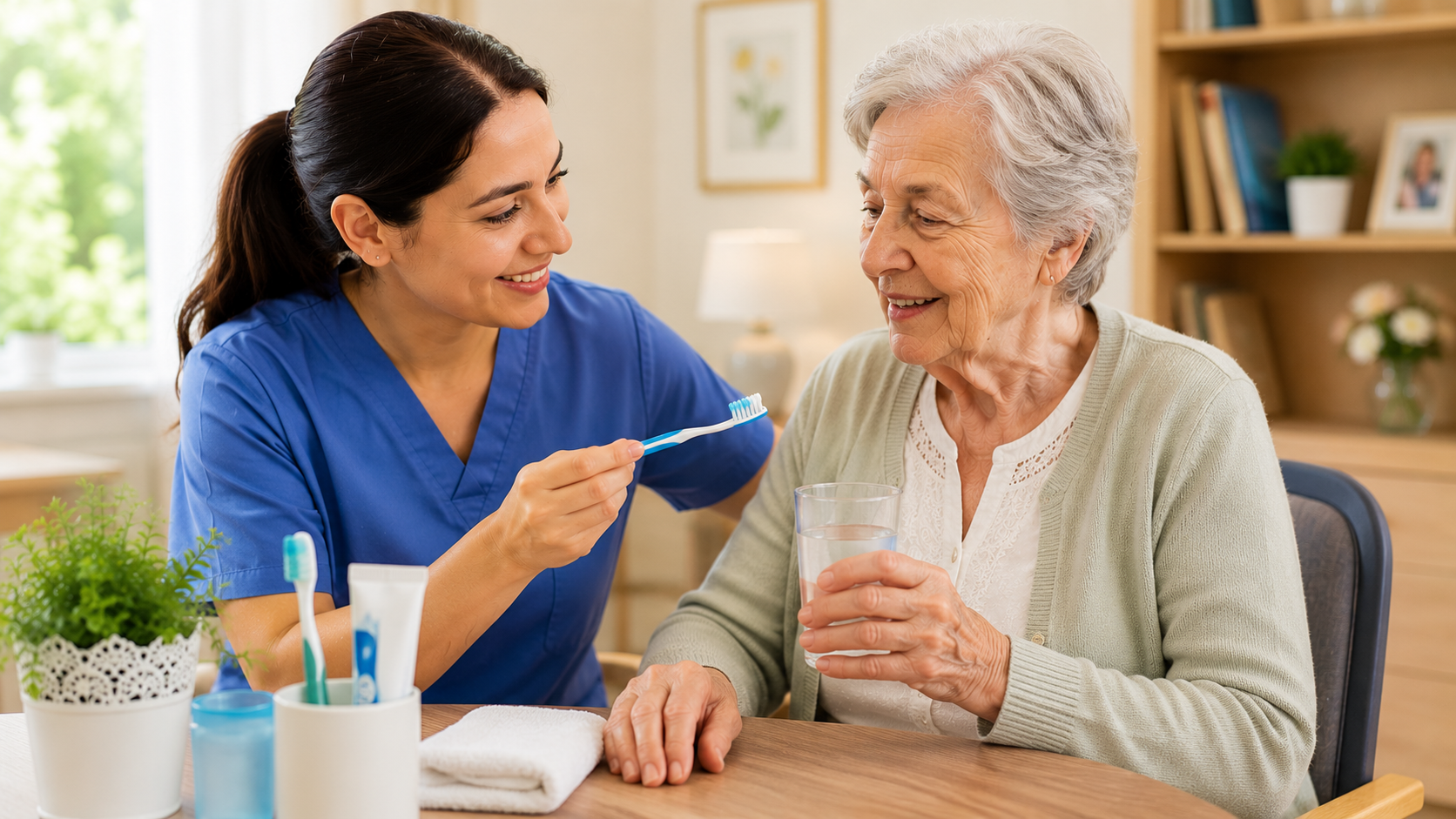
Some residents may need reminders or hands-on assistance with brushing and denture cleaning. Trained carers provide support gently and respectfully.
This may include:
- Helping apply toothpaste
- Supporting hand movement
- Cleaning dentures properly
- Encouraging hydration
- Monitoring oral discomfort
Maintaining routine and consistency helps seniors feel comfortable and secure.
Monitoring Oral Health Changes
Early detection is key to preventing serious dental issues. Care staff are trained to identify signs such as:
- Bleeding gums
- Mouth sores
- Swelling
- Loose teeth
- Bad breath
- Difficulty chewing
- Changes in appetite
Prompt attention allows dental professionals to address concerns before they worsen.
Coordinating Dental Appointments
Many seniors require support attending dental visits or arranging specialist care. Care homes often help coordinate appointments, transportation, and communication with healthcare professionals.
This ongoing collaboration supports better long-term oral health outcomes.
Nutrition and Oral Health Go Hand in Hand
Healthy eating plays a major role in maintaining strong teeth and gums. Seniors who struggle with oral pain or ill-fitting dentures may avoid certain foods, increasing the risk of malnutrition.
Balanced meals that support elderly oral health should include:
- Soft fruits and vegetables
- Calcium-rich foods
- Lean proteins
- Whole grains
- Hydrating drinks
Care homes can adapt meal textures when necessary while still ensuring meals remain enjoyable and nutritious.
Reducing sugary snacks and acidic drinks also helps protect vulnerable teeth from decay.
Supporting Seniors Living With Dementia
Oral hygiene can become particularly difficult for individuals living with dementia. Memory loss, confusion, or sensory sensitivities may cause resistance to brushing or dental treatment.
Experienced carers use calm, reassuring techniques to encourage cooperation and minimise distress.
Helpful approaches may include:
- Maintaining familiar routines
- Using simple instructions
- Demonstrating brushing techniques
- Offering reassurance throughout care
- Choosing comfortable dental products
Compassionate care home health support ensures seniors with cognitive conditions continue receiving essential oral care safely and respectfully.
The Emotional Impact of Oral Health
A healthy smile can greatly influence emotional wellbeing and confidence. Seniors experiencing oral discomfort or visible dental problems may feel embarrassed, withdrawn, or reluctant to socialise.
Good oral care helps residents:
- Feel more comfortable speaking
- Enjoy meals confidently
- Participate socially
- Maintain self-esteem
- Improve overall mood
Care environments that prioritise dignity and personal wellbeing contribute significantly to emotional health.
Preventing Dental Emergencies in Care Homes
Preventative care reduces the likelihood of painful dental emergencies and avoidable hospital visits.
Simple preventative measures include:
- Consistent brushing routines
- Proper denture maintenance
- Routine dental examinations
- Monitoring medication side effects
- Encouraging hydration
- Limiting sugary foods
Prevention-focused dental hygiene seniors programmes support healthier ageing and improve everyday comfort.
Creating a Comfortable and Supportive Environment
For seniors, especially those with anxiety or cognitive decline, a calm environment can make oral care far less stressful.
Supportive care homes focus on:
- Gentle communication
- Patience and reassurance
- Respect for personal preferences
- Comfortable routines
- Building trust with residents
When seniors feel safe and respected, they are more likely to engage positively with daily hygiene practices.
Choosing the Right Care Home for Oral Health Support
Families searching for quality elderly care should consider how oral health is integrated into the overall care approach.
Important questions to ask include:
- Are personalised oral care plans provided?
- Do staff receive oral hygiene training?
- How are dental appointments managed?
- Is assistance available for residents with mobility or cognitive challenges?
- How are oral health concerns monitored and documented?
Comprehensive care home health support should always include attention to oral wellbeing as part of a resident’s overall healthcare journey.
Helping Seniors Maintain Healthy Smiles and Better Wellbeing
Oral health has a direct impact on comfort, nutrition, confidence, and overall quality of life. With compassionate support, regular monitoring, and personalised daily care, seniors can continue enjoying healthy smiles well into later life.
Professional elderly oral health support in care homes ensures residents receive the attention, dignity, and reassurance they deserve every single day.
At PVCH, holistic wellbeing is at the centre of care. From personalised hygiene routines to compassionate daily support, every resident receives thoughtful care designed to promote comfort, health, and happiness.
Discover how our dedicated team supports seniors with compassionate, personalised care that prioritises health, dignity, and wellbeing every step of the way.
Recent Posts



